Rij toevoegen
Element toevoegen
kropper
update
Noorder Kempen Zakelijk
update
Element toevoegen
  • Thuis
  • ...
    • Medisch & Zorg
    • Agrarisch & Landbouw
    • Bouw & Renovatie
    • Detailhandel & Retail
    • Horeca & Toerisme
    • Industrie & Techniek
    • Logistiek & Transport
    • Zakelijke dienstverlening
    • Onderwijs & Vorming
    • ICT & Innovatie
    • Vastgoed
    • Vrije beroepen & Creatieve sector
    • bevolkingsgegevens
September 10.2025
3 Minutes Read

Transforming Agricultural Waste into Energy: The Benefits of Fermentation

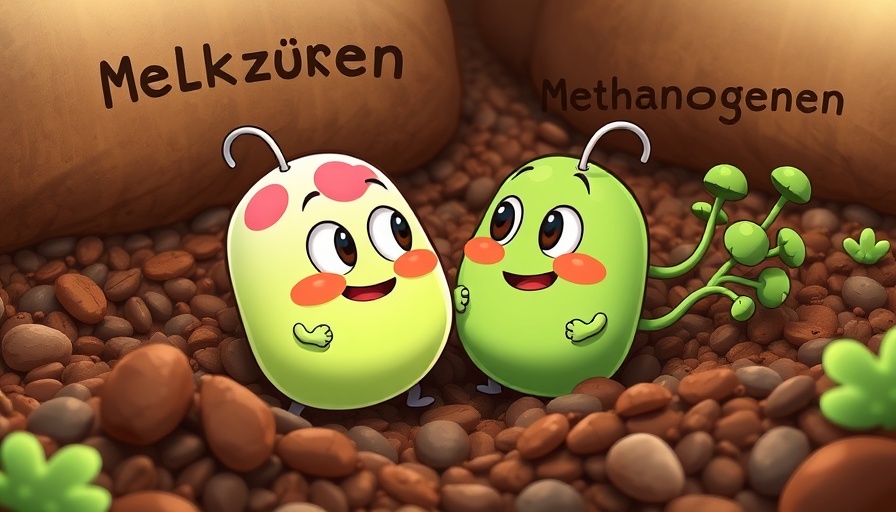
Cartoon microorganisms in manure depicting biological acidification.

Improving Farming Practices Through Innovative Fermentation

In an era where sustainability and environmental responsibility are taking center stage, innovative techniques for managing waste materials in agriculture are becoming invaluable. One technique gaining momentum is the biological acidification of manure, combined with fermentation processes that substantially reduce harmful emissions of ammonia and methane. Recent studies indicate that not only does this approach profoundly benefit environmental health, but it also leads to economic advantages for farmers.

Understanding the Science Behind Acidification

At the core of this method is the addition of energy-rich substances, such as molasses, to manure. This action encourages lactic acid bacteria—already present in animal waste—to produce lactic acid, lowering the manure's pH from above 7 to a more desirable level between 5 and 5.5. Research from the Nutrient Management Institute (NMI) highlights the effectiveness of this method, showing significant reductions in ammonia emissions and bolstered conditions for methane production when manure is digested following acidification.

A Two-Fold Environmental Solution

The significant dual benefit of this approach is in its capability to simultaneously reduce emissions and increase biogas production. Experimentation has shown that intertwining the acidifying process with existing biogas digesters can double the amount of biogas produced—a promising outcome that highlights the economic viability of this method.

Real-World Applications in Groningen

Starting in August 2024, a practical trial was launched in Groningen, testing the acidification of manure mixed with molasses. By regularly mixing this product, farmers aim to sustain an optimal pH level, ensuring it remains beneficial for the entire fermentation process. Some preliminary findings revealed that ammonia emissions from manure storage could be cut by 70 to 90 percent—an astounding figure given the environmental consequences of ammonia in the atmosphere.

Reducing Methane Emissions Effectively

What sets this method apart is its additional capability of stopping methane emissions from manure storage when the pH drops below 6. Methanogenic microbes, responsible for methane production, become inactive at these levels. This means farmers can expect a total reduction in emissions from 20 to 25 percent at a business level, which speaks directly to the evolving practices of modern agriculture and their alignment with climate goals.

The Economic Viability of Sustainable Farming

The transition to sustainable farming techniques can feel daunting for many agricultural professionals concerned about operational costs. The introduction of this acidification process, however, offers an economically feasible solution. By facilitating optimal conditions for the fermentation of manure into biogas, farmers can expect not only to meet environmental emission standards but also to enhance their operational efficiency and profitability.

Cultural Impact and Farmer Adoption

As farmers grapple with changing regulations and consumer demand for sustainable practices, community-driven initiatives around manure management are more crucial than ever. The growing enthusiasm from agricultural experts and farmers alike, as demonstrated by the Groningen initiative, exemplifies a community dedication to improving both economic viability and environmental stewardship in farming.

Conclusion: Embracing Sustainable Practices for a Better Future

The biological acidification of manure coupled with fermentation presents a promising pathway towards minimizing agricultural emissions while maximizing biogas production. As farmers increasingly embrace these innovative practices, they not only advance their bottom line but also contribute meaningfully towards broader environmental goals. Making timely decisions to adopt such techniques could lay the groundwork for a more sustainable agricultural landscape and foster healthier ecosystems.

Agrarisch & Landbouw

3 Views

0 Comments

Write A Comment

*
*
Related Posts All Posts
12.06.2025

Discover How Jort Willemse is Cultivating Beautiful Plants Sustainably

Update A Passion for Plant Cultivation In the heart of Gilze, a small village in North Brabant, a young entrepreneur named Jort Willemse is setting a new standard in the world of horticulture. At just 23 years old, this ambitious son of a farmer has founded his own nursery, Boomkwekerij Jort Willemse, with a clear vision: “I strive to cultivate the most beautiful plants with minimal use of pesticides.” This ethos reflects a growing trend among new farmers who prioritize sustainability and environmental consciousness as integral to their business models. Meeting Market Demands with Quality Offerings Willemse's nursery is no average operation; it spans 1.5 hectares of land dedicated to cultivating a wide array of plants, including multi-stemmed specimens, hedge plants, and various garden trees. His business aims to serve both individual homeowners looking to beautify their gardens and wholesale buyers seeking high-quality stock. “We are focusing on providing our customers with all the planting needs for their gardens in one place,” explains Jort. The increased demand for smaller and larger trees alike has prompted him to also invest in machinery to enhance his production capabilities. Innovative Techniques and Sustainable Practices Understanding the environmental impacts of traditional farming techniques, Jort is keenly aware of the importance of minimizing pesticide use. He employs a Low Volume Spraying System (LVS) that allows for effective pest and weed control with less chemical use. His philosophy centers on presenting healthy, vibrant plants that contribute positively to the landscape, in line with customers' expectations for aesthetic and ecological quality. He comments, “I want to maintain a relationship with the environment while producing beautiful greenery.” The Role of Technology in Modern Farming In a world where technology is increasingly intertwined with agriculture, Jort leverages social media for marketing and education, recognizing its immense potential to reach customers directly. Beyond advertising, he believes that transparency is crucial; explaining his practices and choices can turn passersby into potential clients. Online platforms like Spuitlicentie.nl not only aid him in keeping his pesticide application skills sharp but also provide the flexibility to learn at his own pace, an essential feature for busy entrepreneurs. Looking to the Future Jort’s ambitious goals extend beyond the immediate need for plant supply; he envisions expanding his nursery's offerings significantly. Within five years, he aspires to provide a complete range of plants ranging from 60 centimeters to 3.5 meters. His drive reflects an understanding of market trends and consumer desires, positioning his nursery as a future leader in the local plant market. Conclusion: A New Era of Agriculture The journey of Jort Willemse is not just about cultivating plants; it’s about fostering a sustainable future in agriculture. With plans to innovate further and a steadfast commitment to quality and environmental integrity, Jort is paving the way for a new generation of agri-entrepreneurs. As he continues to expand and refine his practices, his nursery may serve as a model for others in the field. Join Jort in his mission to beautify landscapes with sustainable practices. Support local nurseries and consider the impact of sustainable choices in your own gardening decisions.

12.05.2025

Political Deadlock: What it Means for Agrarians and Future Coalitions

Update Understanding the Political Stalemate in Dutch Coalition TalksThe political landscape in the Netherlands is in a state of flux as informateur Sybrand Buma declares a lack of viable coalition options. The significance of this stalemate cannot be overstated, especially for agrarians who look to the government for policies impacting their own livelihoods and the agriculture sector. After his recent discussions with party leaders, Buma indicated on Thursday that there's no feasible majority coalition in sight, nor a minority coalition that can secure enough backing for essential governance. Currently, the VVD, led by Dilan Yesilgöz, continues to exclude major left-leaning parties, specifically the GroenLinks and PvdA, indicating that tensions are running high in the formation process.Buma conveyed his intentions to meet again with representatives from the five largest factions in the Tweede Kamer on Friday, albeit missing the PVV from those discussions. The political impasse leaves many questions about future governance and critical policies, including agricultural strategies and reforms necessary for the sustainability of the agricultural sector in the coming years.The Stake of Agrarians in Political DevelopmentsFor agrarians, stable governance is pivotal. With a lack of a functional majority, vital legislation that affects agriculture, including policies surrounding environmental sustainability and market pricing, may be stalled. After the previous coalition’s term focused heavily on addressing climate change, agrarians may find themselves impacted by the inability of leaders to form a government that successfully tackles ongoing agricultural concerns. The proposed coalition of D66, CDA, and VVD barely reaches 75 seats, raising alarm bells about its efficacy to drive significant agricultural initiatives. Implications for Key Agricultural PoliciesFurthermore, without a government, crucial agenda items such as land use regulation and sustainable farming practices remain in limbo. The failure of parties to commit to any structural support intensifies uncertainty and holds back the advancements that have been promised, particularly in transformation towards sustainable farming practices that align with climate goals. The ongoing bickering among party factions exacerbates challenges, stirring worries that significant reforms may falter.Additionally, Buma pointed out that discussions will not bear fruit without the willingness to embrace risks from all parties involved. Previous accusations like the ‘arrogance of power’ directed at the VVD by Jesse Klaver only depict the growing divide among political factions that must cooperate to advance any agricultural policy.The Path Forward: What’s Next for Coalitions?While Buma refrains from labelling the situation as insurmountable, the repeated hesitations from parties like D66, CDA, and JA21 suggest that the road ahead remains tumultuous. Recognizing the stakes is crucial—not only for the agricultural sector but for the Dutch public, which seeks a responsive government that can face the pressing challenges ahead. Continuous engagements on Friday will offer insights into possible compromise or further deadlock.For agrarians, staying informed and actively engaged in these discussions—whether through local agricultural organizations or alliances—will be vital. Insights into negotiations could inform strategies for advocacy in favor of sustainable practices. Equally, pushing for clarity on policy outcomes will be essential for ensuring that the agricultural sector's needs don’t fall by the wayside in these fractious political waters.Call for Engagement and AwarenessThe current political dynamics underscore pressing uncertainties for not just farmers but the agricultural community at large. As policies are being debated, it is vital to connect with local representatives and express your concerns about how agricultural issues are being handled. Stay tuned to these discussions as they unfold, and be proactive in ensuring your voice is heard.

12.04.2025

Is de Ontbinding van de Eerste Kamer een Noodzakelijke Stap voor Politieke Stabiliteit?

Update BBB's Radicale Voorstel en de Toekomst van de Eerste KamerIn een steeds dynamischer politiek landschap heeft de BoerBurgerBeweging (BBB) een opmerkelijk voorstel gedaan: om de Eerste Kamer te ontbinden. Senator Gert-Jan Oplaat stelde voor om de zitting te beëindigen door de storende afsplitsingen en overstappers te adresseren. Met het aantal fracties dat inmiddels is gestegen van vijftien naar negentien, stelt BBB dat de huidige samenstelling van de Kamer niet meer in lijn is met de verkiezingsuitslag van 2023.Het voorstel kwam op de voorgrond na tal van overstappen door senatoren naar andere fracties. De complicaties van de huidige politieke dynamiek, met fracties die zich splitsen en nieuwe senators die onafhankelijk worden, doen twijfels rijzen over de effectiviteit van de Eerste Kamer.De Impact van Afsplitsingen op de PolitiekAfsplitsingen hebben de afgelopen jaren een groeiend probleem gevormd in de Nederlandse politiek. Dit fenomeen belemmert niet alleen de politieke stabiliteit, maar veroorzaakt ook verwarring onder de kiezers. De plenaire bijeenkomsten van de Eerste Kamer zijn een echo van deze verwarring, waarbij belangrijke stemmingen worden beïnvloed door het aantal fracties.Bijvoorbeeld, recentelijk zijn leden van BBB overgestapt naar de D66, wat de politieke verhoudingen verder bemoeilijkt. Het is een spiegel van de bredere trend in de politiek, waarbij partijen steeds meer moeite hebben om samen te werken binnen een gefragmenteerd landschap.Het Potentieel voor Nieuwe VerkiezingenAls het voorstel van BBB erin slaagt, zou dit leiden tot nieuwe verkiezingen voor de Eerste Kamer, waarbij de Provinciale Staten opnieuw de kans krijgen om 75 senatoren te kiezen. Dit proces brengt zijn eigen uitdagingen met zich mee, vooral omdat de Provinciale Staten zelf ook kampen met afsplitsingen.Naarmate de roep om vernieuwing groeit, zijn de vragen die dit oproept talrijk. Hoe zou een nieuwe samenstelling van de Eerste Kamer eruitzien? Zouden nieuwe verkiezingen kunnen leiden tot een meer stabiele regering?De Politieke Context van Dit VoorstelDe roep om de Eerste Kamer te ontbinden is niet zomaar een plumpudding in de politieke arena; het is een reactie op een diepgeworteld probleem dat veel kiezers frustreert. De afsplitsingen zijn niet enkel een politiek spel, maar ze raken aan de kern van hoe democratische werkprocessen werken.In de context van de huidige politieke onrust lijkt er een steeds grotere behoefte aan stabiliteit en samenhangende besluitvorming. Dit voorstel van BBB is misschien wel een poging om te zeggen: 'genoeg is genoeg', en kan de aanzet zijn tot een nieuw politiek tijdperk waarin de eisen van de kiezers centraal staan.Verkenning van PerspectievenDe vraag of de Eerste Kamer werkelijk ontbonden moet worden, leidt tot verschillende standpunten. Ondertussen is er een groeiende bezorgdheid over de rol van kleinere partijen en hun invloed op de besluitvorming. Als gevolg hiervan vinden sommige politieke analisten dat het huidige systeem moet worden herzien om de effectiviteit te verbeteren.Toch zijn er ook skeptici. Ze wijzen erop dat meer veranderingen kunnen leiden tot nog meer politieke games, waardoor de stabiliteit van de democratie onder druk komt te staan. De discussies rond deze thema’s zijn van groot belang voor agrariërs en andere groepen die sterke representatie nodig hebben in de politiek.Oproep tot ActieAls betrokken burgers en kiezers in de landbouwsector is dit een belangrijk moment om uw stem te laten horen. De discussie rondom de Eerste Kamer en het voorstel van BBB is een kans om te pleiten voor stabiliteit en representatie. Neem deel aan lokale bijeenkomsten, spreek uw politici aan, en zorg ervoor dat uw zorgen over representatie in het politieke proces worden gehoord.

Terms of Service

Privacy Policy

Core Modal Title

Sorry, no results found

You Might Find These Articles Interesting

T
Please Check Your Email
We Will Be Following Up Shortly
*
*
*